

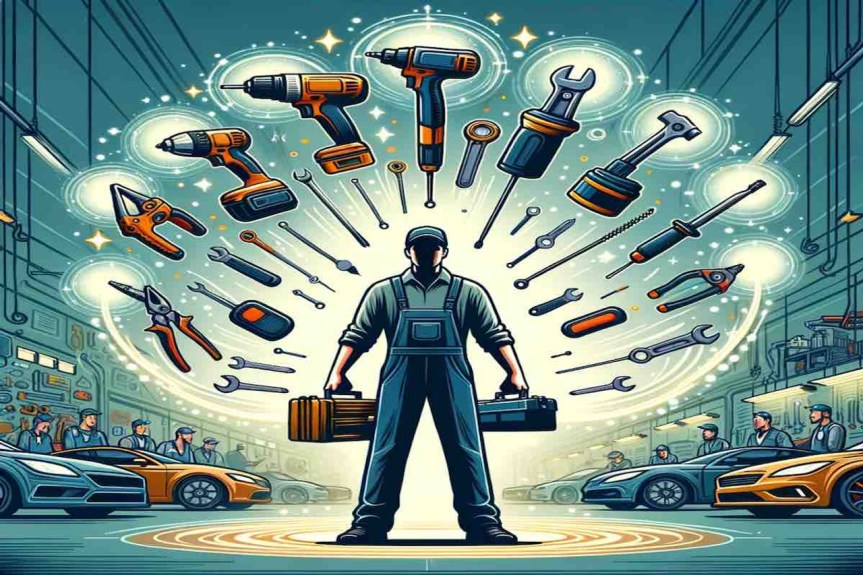
Introduction: Navigating a World Shaped by Innovation
We live in a time where the boundaries between imagination and implementation are blurring at a breathtaking pace. Technology, once a specialized field understood by few, has now become integral to our daily lives. The tools born from this evolution are not merely gadgets or software—they are extensions of our intellect and enablers of our ambitions. From revolutionizing how we communicate to enhancing how industries operate, modern tools powered by advanced technologies have laid the groundwork for what many call the “Precision Age.”
The Evolution of Tools: From Handheld to Digital Ecosystems
Humans have always been toolmakers. From primitive stone instruments to advanced robotic arms, our journey has been one of continuous enhancement. However, what distinguishes today’s era is the convergence of digital technologies that form interconnected ecosystems.
From Analog to Algorithmic
-
Traditional tools were physical and mechanical, often requiring manual skill and precision.
-
Today’s tools rely heavily on software algorithms, artificial intelligence (AI), and data analytics.
-
These tools not only execute tasks but also learn from patterns, anticipate needs, and offer predictive insights.
The Rise of Smart Tools
Smart tools—be they voice assistants, AI-powered dashboards, or cloud-based collaboration platforms—do more than assist; they adapt. Their capacity for self-improvement through machine learning marks a profound shift in tool design. We are no longer programming tools—we are training them.
Empowering the Individual: Personal Productivity Reimagined
Technology has democratized access to powerful tools that once required significant resources or technical expertise. Today, a single individual can accomplish what once required a full team.
Digital Assistants and Organizational Tools
-
Tools like Notion, Evernote, and Obsidian redefine personal knowledge management.
-
AI-powered writing assistants such as Grammarly and ChatGPT help refine content with professional polish.
-
Calendar apps like Fantastical or Google Calendar integrate task automation with predictive suggestions to optimize scheduling.
Creative & Professional Autonomy
-
Design platforms such as Canva and Adobe Express allow non-designers to produce compelling visuals.
-
Musicians and filmmakers use tools like Logic Pro and DaVinci Resolve to create professional-grade work independently.
-
Platforms like Substack, Medium, and Ghost empower writers to publish and monetize their craft directly.
Business Transformation: Efficiency Meets Insight
In the business world, the fusion of technology with operational tools has redefined productivity, customer engagement, and innovation.
Cloud-Based Collaboration
-
Tools like Slack, Microsoft Teams, and Zoom are not merely communication channels—they are digital workspaces.
-
Project management platforms such as Asana, Trello, and ClickUp enable seamless coordination across time zones and continents.
-
Cloud storage tools like Google Drive and Dropbox ensure real-time access and version control, eliminating inefficiencies.
Automation and Analytics
-
Automation platforms like Zapier, Airtable, and Power Automate connect disparate applications, enabling complex workflows with minimal manual input.
-
Business Intelligence (BI) tools such as Tableau and Power BI translate raw data into visual dashboards that inform strategic decisions.
-
Customer Relationship Management (CRM) systems like Salesforce and HubSpot provide integrated solutions for tracking engagement and optimizing marketing strategies.
Industry Disruption: The Toolset Behind Modern Revolutions
Entire sectors are being reshaped by the precision and power of new technologies and tools.
Healthcare
-
Wearables like Fitbit and Apple Watch continuously monitor health metrics, allowing for early intervention.
-
Telehealth platforms extend medical care beyond physical clinics, improving access for remote populations.
-
AI-assisted diagnostics, such as those developed by PathAI or Zebra Medical Vision, improve the accuracy and speed of medical imaging interpretations.
Education
-
EdTech platforms like Coursera, edX, and Khan Academy offer personalized learning pathways with real-time feedback.
-
Tools such as ClassDojo and Google Classroom facilitate digital classroom management and student engagement.
-
Virtual Reality (VR) and Augmented Reality (AR) enhance experiential learning, making abstract concepts tangible.
Agriculture
-
Precision farming tools leverage drones, sensors, and satellite imaging to optimize irrigation and crop planning.
-
Robotics in agriculture, such as automated harvesters and seed planters, reduce labor dependency and increase productivity.
-
Data analytics platforms guide sustainable farming decisions by forecasting weather, pest risks, and soil health.
The Ethical Lens: Power, Responsibility, and Human Impact
While the benefits of technological tools are undeniable, they come with responsibilities. As these tools gain intelligence and autonomy, ethical concerns grow more pressing.
Key Ethical Considerations
-
Privacy: Data collected by tools often enters corporate ecosystems. Ensuring user privacy and consent must remain paramount.
-
Bias and Fairness: AI-driven tools are only as unbiased as the data they are trained on. Vigilance is required to prevent systemic discrimination.
-
Dependency vs. Empowerment: Overreliance on tools may erode human judgment or lead to skill atrophy. Mindful usage is essential.
The Future Toolkit: What Lies Ahead
Looking forward, technology will evolve from tools we use to companions that co-create, co-learn, and co-evolve with us.
Trends Shaping the Next Generation of Tools
-
Neural Interfaces: Direct communication between human brains and machines, enabling thought-based control.
-
Quantum Computing: Exponentially faster processing for solving problems too complex for classical computers.
-
Decentralized Tools: Blockchain-powered applications that return control and ownership to users.
Human-Centric Design
Future tools will be judged not only by their capabilities but by how well they align with human needs. Design thinking, ethical frameworks, and inclusivity will play critical roles in shaping this future.
Conclusion: Tools as Mirrors of Human Intention
The story of technology is, in essence, a story of humanity’s pursuit of mastery—over nature, over knowledge, and over time. The tools we create are mirrors of our priorities, reflections of our creativity, and amplifiers of our capabilities.
But the power of these tools depends entirely on how we wield them. When used with care, intention, and wisdom, technology becomes more than a mechanism—it becomes a medium for progress. In this Precision Age, it is not enough to simply possess tools; we must learn to partner with them thoughtfully, responsibly, and imaginatively.
As we stand on the cusp of a future defined by accelerating change, one truth remains timeless: our tools shape our world, but it is we who shape the tools.

